Tip #1 to begin preparations for a journey where the signposts are unfamiliar, where the new worlds you see reveal elements in yourself that you never knew existed.
The itinerary of my first trip to Japan was a study tour and engineered perfection crafted by JFMF the Japan Fulbright Memorial Fund.
I was assigned to Ohda, one of 10 groups each destined for a unique study adventure in Japan. We would come together at the end of 20 days to share our experiences.
First day, last announcement: “The bus departs at 7:03 am.” It was delivered without the typical warning: “Don’t be late.” It was shared more as an invitation, rather than the implicit command: “Be there on time.” In a polychronic culture, people come before deadlines. It felt good. This is the way life ought to be.
We learned immediately the next morning that the white gloved driver would roll away from the hotel at exactly 7:03.
I tried to get to Okayama (origin of my mother’s parents) but I was on a JFMF itinerary and soon learned that Okayama would have to wait for another time. Only later did I realize that the family I was to meet and stay with was selected specifically for me. I was operating in a monochronic frame of mind and soon, soon I’d become aware of a polychronic sway of Japanese life hidden but not, in a world that on the outside looked like the precision gears and springs of the finest time keeping device ever crafted.
That time came 10 years later as I singularly crafted a personal itinerary based on an inner quest to find the Japanese family my mother never met and walk the land of her ancestors. I first stepped onto the ground at Narita International Airport and made my way to Asuka Village the next day.
So was it by chance that my personal quest would begin at a family home stay in Asuka Village? Chance that I’d stay at the center of what I’d later learn as the Asuka Period when the term samurai first came into broad use? Chance that I’d soon meet one of the most eminent sword smiths in all of Japan? A Living Japanese National Treasure. Chance? Destiny? Questions with answers about to unfold with each new step in ancestral lands.
A perfect reflection of the words of anthropologist Fosco Maraini:
You are about to embark upon “a journey where the signposts are unfamiliar, and where the new worlds you see reveal elements in yourself that you never even knew existed.”
Maraini was talking about Japan. See Tip #32 His insight prescient, his prediction intimate, a perfect fit, like the inside of my skin.
Historical Prelude:
When I sit with my family to work on a 1,000 piece jigsaw puzzle (a winter sport), we commonly start by assembling the perimeter. So too have I now begun to frame my experiences in Japan by gluing down the names, places, culture and history in a way that allows for experience to interlock with Japanese history.
縄文 30,000 BC to 538 Jōmon Period: Japanese prehistory.
縄文,Jōmon,means “cord” and refers to pottery decorated by pressing cord onto wet clay. Epiphany: Archaeological interest in pottery stems from its appearance in an archaeological record as evidence of the transition from a former nomadic hunter gatherer life to living in one place permanently which requires food preservation and storage technologies like pottery, which allows for fermentation of food.
飛鳥時代 538-710 Asuka Period.Long before the age of samurai there existed the high nobility after which the rest were farmers, fishermen, charcoal makers, artisans, metal smiths, carpenters, weavers, armorers, potters, paper makers, and ritual specialists. My grandfather Jotaro Kobayakawa was a charcoal maker for 20 years before he left Japan in 1906.
During the Asuka Period, 7 empresses reigned from the fifth to the eighth centuries, but after 770 succession was restricted to males. It was during this time that the term samurai came into use.
Empress Suiko (554–628), r. 593–628—first ruling empress. Ruled for 35 years.
Empress Kōgyoku (594–661), r. 642–645—formerly Princess Takara (Empress Consort of Jomei)
Empress Saimei (594–661), r. 655–661 (same person as Empress Kōgyoku)
The Taihō Code of 702 classified most of the Imperial bureaucrats into 12 ranks, each divided into two sub-ranks, 1st rank being the highest adviser to the emperor. Those of 6th rank and below were referred to as "samurai" and dealt with day-to-day affairs. Although these "samurai" were civilian publicservants, the modern word is believedto have derived from this term. Military men, however, would not be referred to as "samurai" for many more centuries.
Empress Go-Sakuramachi (1740–1813), r. 1762–1771—most recent ruling empress Source: Wikipedia https://simple.wikipedia.org/wiki/Japanese_empresses
Samurai were initially civil public servants beginning in 702 and for over 400 years would not carry military responsibilities until The Kamakura Period (1185-1333) which “saw the rise of samurai under shogun rule as they were entrusted with the security of the estates...” They “became the symbols of the ideal warrior and citizen.”
奈良平安時代710-1185 Nara and Heian Periods. The new imperial capital is established at Heian-kyō, Kyoto in 794
Fujiwara family controls the political scene via occupation of all Kyoto political offices and strategic marriages with the imperial family. This peaks in 1016 but comes to an end in 1068. Now, the power of the central government slowly shifts to large independent land owners known as daimyōs. https://www.japan-guide.com/e/e2132.html
1068 Previously, samurai were public servants.
To maintain order diamyōs enlist warrior samurai to protect their lands. Some of the former samurai public civil servant class now become samurai of the warrior class. As more power shifts to land owners the need for a warrior samurai class grows.
鎌倉時代1185 Kamakura: Minamoto Yoritomo succeeds as the new leader of Japan, is appointed Shogun, and establishes his home city Kamakura as the center of the new government.
室町時代 1333-1568 Muromachi Period
Oda Nobunaka begins the first attempt to unify Japan.
安土桃山時代 1568-1600 Azuchi-Momoyama Period
Oda Nobunaga assassinated 1582 by Akechi Missuhide
After 120 years of civil war, the daimyō and samurai Toyotomi Hideyoshi unifies Japan in 1590. His father Kinoshita Yaemon, a peasant foot soldier (ashigaru), to a samurai. Hideyoshi rose from peasant class to retainer to distinguished samurai general to lord Oda Nobunaka whom he succeeded.
Tokugawa leyasu was the richest and strongest of all daimyōs at the time of Nobunaga’s death and fights alongside Ishida Mitsunari to help bring Hideyoshi to power.
Ishida Mitsunari was a minor daimyō at this time but very loyal to Hideyoshi who appoints Mitsunari Inspector General for Tokugawa’s ill conceived invasion of Korea and China. Ishida is a commander of an unwinnable war.
Enter Kobayakawa Takakage,who was one of these daimyōs fighting in Korea.
Once ordered, daimyōs were forced to fight for Tokugawa in two Korean campaigns, eventually coming to realize the madness in Tokugawa’s vision of ruling all of Asia. The war would never be won and only these daimyōs would suffer the losses of samurai and resources.
This is perhaps why Mitsunari became disliked by many of the daimyo supporting Tokugawa.
While Inspector General in Korea, Mitsunari sends Tokugawa a scathing criticism of Kobayakawa’s performance. Tokugawa leyasu strips Kobayakawa from many of his rights, privileges and lands, a terrible reward for loyally fighting for Tokugawa. This is why at a most critical battle Hideake Kobayakawa joins forces with Tokugawa leyasu to defeat Mitsunari at the Battle of Sekigahara, October 21, 1600. In short, Hideake Kobayakawa with 15,600 samurai turns history to install Tokugawa leyasu as the Shogun who finally unifies the country ending hundreds of years of civil war in Japan.
Tokugawa leyasu(Eastern clans) vs. Ishida Mitsunari (Western clans) at the October 21, 1600 Battle Of Sekigahara.
Mitsunari recruits Kobayakawa Hideake* who with 5 other daimyōs switch their allegiance to Tokugawa leyasu at the Battle of Sekigahara. What is it about Mistunari that leads to the defection of 6 diamyōs giving Tokugawa leyasu a decisive victory? It may be that Mitsunari in executing Tokugawa’s ill conceived war in Korea, forcing loyal daimyōs to fight a war in a foreign land against their better judgements, leading to the unnecessary loss of thousands of samurai and the resources of many daimyōs in fighting an unwinnable war.
*Docudrama: Age Of Samurai, Episode 6 at 16:25.
徳川時代 1603-1868 Tokugawa Shogunate at Edo
In part, Daimyōs were ranked by the value of the land under their administration, kokukada. One koku was the amount of rice required to feed one person for a year.
In the year 1650, Japan’s total kokudaka was 26 million koku. 4.2 million koku directly controlled by the Shogun.
This web page was inspired by my long time friend Lloyd Kajikawa who mentioned in is last email: “You may be directly descendant in the Kobayakawa line. Who knows?”
Similarly, when Patricia and I visited the Samurai Museum in Shinjuku the owner became very animated when Patricia said I had Kobayakawa lineage. He had made the leap that my Kobayakawa family was descendant from Hideake Kobayakawa.
Not so fast. Is my Kobayakawa family descendant from Hideake Kobayakawa?
Let’s do the research.
Hideake was adopted into the Kobayakawa family by Takakage Kobayakawa who himself was a Morī adopted by Kobayakawa, so both of these figures are not ancestral. Since these prominent historical Kobayakawa’s were adoptees, I will instead follow the DNA.
If there is a common lineage it would bridge Hideake’s Kobayakawa clan to my earliest Kobayakawa ancestors. At the Battle of Sekigahara, October 21, 1600 Hideake led 15,600 samurai of the Kobayakawa clan into battle. How many of these men had married into the family? How many were unrelated farmers living on Daimyō Hideyaki’s land? And how many were familial Kobayakawa? It is this last group that may provide the ancestral bridge to my recently found Kobayakawa family in Niimi, Okayama.
If there is an ancestral link between the Kobayakawa clan of Kideake’s time it would be found within the 185 years span leading to the birth of my Grandfather’s grandfather, Jouemon Kobayakawa, who was born circa 1785. His son Kitaro was born May 28, 1830. To answer Lloyd’s question, the answer will be found by researching the Kobayakawa’s between 1600 and 1785.
Patricia found an Instagram account: “japanoninsta”, a few months ago and has been forwarding screenshots to me that are so beautiful they beg to be included in this photo gallery.
“japanoninsta” appears to be a community of contributors which explains the many extraordinary photos gathered in one place.
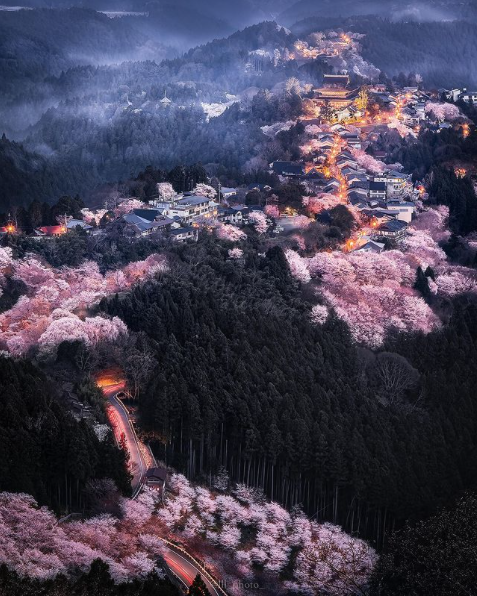
I must share these photographs with you, they are that good! At the base of each post is the photo’s location. This one is from Osaka’s Katsuo-ji Temple, “also called the Winning Temple.
It might happen to you as well. We’ll see a photo and reflexively say: “I wanna go there!”
I quickly ran a Google search on Katsuo-ji .... and placed this temple on the top of our list!
For reference, this is the full screen shot. But I’ll post cropped photos for aesthetic appeal. All the photo credits go to japanoninsta unless otherwise stated.
Senator J. William Fulbright from Arkansas was the longest serving chairman in the history of the United States Committee on Foreign Relations. He is widely admired for the creation of the Fulbright International Fellowship Program in 1946 established to “increase mutual understanding between the peoples of the United States and other countries through the exchange of persons, knowledge, and skills. It is considered one of the most prestigious award programs and operates in 155 countries.”
Among the earliest participants were recognized leaders and academics from war ravaged Japan where in September of 1945 Douglas MacArthur began the work of rebuilding Japan. Those Japanese leaders came to America and returned with knowledge that would lead their country to future prominence.
In gratitude The JFMF Japan Fulbright Memorial Fund was established to return the favor by providing American Educators a similar experience designed to increase mutual understanding through the exchange of educational leaders. That’s how I found myself in Japan in 2005. That JFMF experience changed the course of my life though I wouldn’t know it for another decade.
Chucky (Charles Thomas) CEO of Outward Bound Adventures Arrived Tokyo March 28, to meet his wife Sharon (already here for a City Building Conference). Then he boarded a bullet train to Kyoto where I suggested a home stay with my Asuka Village friend Megumi and her 3 generations in one household Tanaka family.
Sunday, November 20, 2005 Like footprints along a lifetime journey, the people we meet leave us with enduring, sometimes long lived stirring impressions that open doors to worlds we never imagined. Each person I met in Japan could be a chapter in this little book. That’s it! I’d like to write a book about each person I met.
These are the remarkable people I met once upon a time in Japan. In gratitude the Japan Fulbright Memorial Fund which sponsored my first trip to Japan.
2:30 pm. Kyoko Jones was the first Japanese official to speak to our group of 200 American Educators, a total of 600 this year alone. Kyoko was the JFMF Program Director of our 20 day fellowship. We were clueless, she was patient, a model of good teaching.
At one of her many engagements with us she picked up the microphone to assist our learning of correct Japanese pronunciation:
“these words end with a long e sound like in Edward: karyoke, sake, karate.”
9:30 am Friday, November 25, 2005, 3rd Floor Tokyo Prince Hotel: Peace Education Seminar in the Golden Cup Meeting room.
Tomoko Yanagi, Teacher, Hiroshima Misuzugaoka High School.
It would take me 10 years to finally arrive in Hiroshima but it all started with Tomoko and Koji Ikeda’s presentations on Peace Education.
When I posted my Hiroshima video to YouTube I said: “Every politician in the world must visit Hiroshima Peace Park before taking office.”
Click on the video below.
Mr. Koji Ikeda
10:40 am. Since I was seated in the first row and since tears were streaming down my cheeks, I wanted to turn around to see if I was the only one crying. So I did.
8:16:02 am August 6, 1945
Koji Ikeda had just picked up his crying and always hungry baby. His wife had gone into the city, on her morning walk for groceries, she’d be back soon. It was August 6th, that moment a blast wave shattered his Hiroshima home. When he regained consciousness... “Where’s my baby?” “What happened to the house?” and “How long was I out?” and All that remained was piles of splinters and chards of wood where once stood his home. “Where is my baby?” Searching through the broken timber, Koji finally found his baby, but the hillside was a neighborhood of rubble.
2005 Family Stay: 200 Japanese families host Japan Fulbright participants overnight providing American visitors with an enlightening experience with a Japanese family.
My first Family Stay was in Ohda Japan with Miyuki Hadano and her family.
Miyuki is an Anatomy Professor and Nurse, seen here with her children Kanae and Kazushi. Looking back at the 20 days of my first journey to Japan, the most memorable part of my experience was my stay with her family.
Miyuki arrived at our Japan Fulbright Family meeting in Ohda. Kyoko made announcements, and introductions were made. I was teamed with Miyuki because she taught anatomy to nurses and I taught Anatomy and Physiology at the high school level. It seemed we were all about to do something strange and new... seasoned with wonder. In a few minutes we were on our way to her home. For the first time in Japan I felt a sense of the unknown I’d never felt before. At that moment, Miyuki pulled off the street: “First we must stop to for sweet pastries.”
SIPPING TEA WITH BUDDHA
Miyuki’s Parents: Tokuji-san and Okuko-san were a authentically welcoming experience. I was seated warm and cozy on the floor, under their “kotatsu” at their family dinner table. (View an example of a kotatsu in the photo below. Now imagine it's heated fabric draped over your lap, inviting all to stay and bask in it's warmth.)
Tokuji-san motioned for me to follow his movements. He took a sip of tea. Then a nibble of pastry. I did the same. He said: “Tea bitter,” and another bite of pastry. He repeated the pairing. “Bitter... sweet. Like life.” Ah... so this is having tea with Buddha. I'd never imagined Buddha at home with a complete family, but it makes sense.
こたつ Kotatsu is a heated futon covering on a table.The room was chilly. The kotatsu gave the table gathering a deeper sense of belonging, a sense of family. I wanted to stay longer to enjoy it’s warmth.
Miuki’s dad Tokuji-san with his grandson son
Miyuki Black Belt
Yoshihiro Morita, Science Teacher at Nara Super Science High School and ____ _____ also at the same school.
2006Akiko Murakami
2015 Yoshio and Akiko Murikami
It was Akiko who I asked if she knew how I might find a Home Stay near Nara. She mentioned my request to her father Yoshio (photo left) who knew exactly where I should go for my home stay.
They picked me up at the Nara train station and drove me to the Tanaka Family Stay in Asuka Village about 40 minutes south of Nara station. The city scape becomes the country side, moves more fluid like. We pull up to a large home even though I’ve been told that Japanese homes are tiny. This home is not.
Takako and Yuji Tanaka move at the center of this family and when their daughter got married, they built an adjoining home so the grandchildren are part of a three generation household. Across the lane is their families vegetable garden. I will see Yuji and Takako tending to their garden in the years to come. That’s the way life ought to be.
Starting with my HomeStay in Asuka Village near Nara Japan.
Megumi Matsukawa (seated), and her dad Yuji Tanaka (standing), receive me with an earnest and warm welcome. She teaches junior high school, he’s on the board of education. The family gathers, they listen closely as I share my mother’s story and my quest to find the land of her ancestors.
After dinner I show their family my mother’s family tree. At the end of the evening Yuji asks to borrow that document.
In the morning, over breakfast Yuji Tanaka gives me a brilliant conceived introductory document written in Japanese, with an infographic showing me and my mother and Jotaro and Taka Kobayakawa, whose families I’m hoping to find. It’s a long shot at best, but as I was soon to discover, it was an amazing key for my quest. You see, my command of Japanese is so scant, making genealogical headway would be one millimeter short of impossible. Instead Yuji-san and given be the clearest single page document in Japanese that all I had to do is hand it to the clerk at the counter or anyone else and they would instantly know what I needed without me stumbling through a linguistically foggy explanation. If you know of someone tracing their geneaology in Japan show them this page, Finding Your Japanese Ancestors.
The next morning Takako Tanaka drives me to Asuka Train Station and I’m off for Niimi, in the prefecture of Okayama, the land of my ancestors via the city of Okayama where I find the hotel Shinichi has reserved in my name just a short walk from the Okayama Station.
Documents in hand, I board a train. All I know is that the next step of my quest requires a visit to Niimi and the word 市役所 shiyakusho.
Shiyakusho is the Japanese word for City Hall where I hope to find geneaological links to my ancestral family. I present my family document to a clerk who points me to the correct window where I present it again. Soon Sohji Ishihara is called from upstairs because his English is excellent. He tells me right away that his Ishihara family is not related to my mother’s Ishihara family here in Niimi. His ancestors are the Okinawa Ishiharas.
It takes four hours to find a connection.
I want to thank the four researchers, but it would be impolite to invite the three ladies to dinner. So I turn to Sohji and tell him I want to take him to dinner. He pauses for a few seconds and says: “No.”
“I’ll take you home, we’ll have dinner with my father.” A door to my future was about to open.
Yuji and Sohji Ishihara, his colleagues and family
Yuji knew that we could find land ownership historical documents at Niishi City Hall in the next little town. After breakfast, and a short drive, Yuji presented The city clerk with my genealogy documents who was quick to bring out out archival large format property maps books from the early 1900’s. We found Jotaro and Taka Kobayakawa’s land and were given directions. The house had been replaced by a large rice field but this was definitely the land where my grandparents walked. This photo captured Yuji saying: “This is the land of your ancestors.” I looked up at the forest covered mountains surrounding the valley and thought: “This is what my grandparents saw when they lived on this land. This is the land I came to find.”
Yuji also knew of a ancient Niimi Buddhist priest at a temple up in the hills about 20 minutes away. “This priest has been here for a very long time. He knows all the old families.”
Yuji Ishihara was a genius who like Sherlock Holmes knew how to introduce me to this man who would literally point me to the building where I’d find the first member of my ancestral family living in Japan
Click below for Yuji’s short documentary.
Kyoko Kobayakawa listens as Yuji explains our visit.
My friend Yuji Ishihara shows Kyoko Kobayakawa my geneaology document. It takes a few moments for the information to register. Then her eyes widen quickly recognizing that we are second cousins! She picks up her phone, dials her brother to spread the news. Before I know it we have a date to have dinner with him at his Niimi restaurant that night. She also calls her uncle Masuo Kobayakawa in Tokyo to let him know that I’d love to meet him before I leave Japan in a few days. He will be the ninth.
Kyoko Kobayakawa (lower right) and family
Kyoko was the first member of my mother’s family I found in Japan. She invites me to her home to meet her family. You’ll see her and her family in the documentary: My Friend Yuji.
Today I met eight descendants of my mother’s ancestral family. “Where ever buddhists go, where ever she is, she’s happy to meet them with me.”
In a few days I will meet Mio in Hiroshima and Kimiko Nakada in Tokyo. She will introduce me to Masuo Kobayakawa and family
Ninjaologist Hiroshi Ikeda joined us at the Tanaka’s Home Stay in Asuka Village. From him we learned about the real side of Ninja’s.
Hollywood ninja images are incomplete and therefore off the mark. For example: “only the inept ninjas fight, the good one’s are invisible, they slip into your village unheard and never seen” and are gone without a breeze. This episode of Japanology Plus features Hiroshi. Click HERE for an informative 27 minute Ninja video.
2019
Ginza Book Fair, exit Jimbocho Station.
2020
Nine trip summary.
Japan 1. November 20-December 8, 2015 Japan Fulbright Fellowship (20 days in Japan) Tokyo, Ohda schools, and first ryokan.
Japan 2. July 2006 International High School Science Collaboration with Nara Super Science High School. Kyoto and Nara where we meet Akiko Murakami.
Japan 3. August 19-September 8, 2015 The Ancestral Journey. Narita, Nara, Akido, Asuka Village, Okayama City, Hiroshima, and Niimi where I meet Sohji, Yuji and their family and 9 descendants of our ancestral family.
Japan 4. October 21-October 30, 2015 Tokyo, Asuka Village, Niimi, Ishihara stay, Tatara Samurai Festival.
Japan 5. January 18-27, 2016 Pre Honeymoon Trip with Patricia to Tokyo, Shinjuku Kabukicho, Mori & Nezu Museums, Akiko and Tonpopo, Miwa Mountain of 1,000 shrines, Asuka Village, Atami and on to Sydney.
Japan 6 March 30-April 8, Tokyo, Okayama, Niimi Kobayakawas, Kurashiki, Ueno and Tokyo where Kimiko Nakada introduces me to Masuo, the 9th descendant of our ancestral family.
Japan 7. March 17, 2017 Proposal Trip with Patricia, Osaka Mokumeganea Ring, Asuka Kimono, Nara Knife Store, Kyoto Heian Shrine, Kurashiki and last visit with Yuji Ishihara and the new baby, back to Tokyo to visit Tama and Musashino Universities. Second Masuo family visit with luncheon, resized engagement ring from Kyoto finds us in Tokyo.
Japan 8 April 2018 with Patricia to Tokyo 8 days, + Niimi visit Yuji’s graveside w Buddhist priest. and visit w Futoshi Kobayakawa and family.
Japan 9. March 30-April 9, 2019 Wedding trip Patricia, Chuckie, Jim, Bill, Alexandra, Sakura Shinto Wedding with Megumi, Sohji and Masuo’s family.
Two hundred American educators unbuckle their seatbelts. We’ve just heard the signal clearing us to pull our bags from the overhead bins. After 11 hours in the air we’ve finally landed at Narita International Airport for a 20 day introduction to the people, schools, and culture of Japan.
My first trip to Japan (in 2005) was under the auspices of The Japan Fulbright Foundation*. While the itinerary of our experience was built on the precision of the Japanese mind, it was also on that trip I had the honor and pleasure of a home stay with Miyuki Hadano and her family. What an extraordinary way to learn about Japan! My Home Stay with the Hadano family ignited my desire to return to Japan to view the land my grandparents walked in Niimi Okayama before they left for California in 1906. Each day added more fuel to that fire.
*(more about Japan Fulbright later).
In 2006 The Japanese Ministry of Education asked me to engineer an International Student Science Exchange asking me to select 5 top high school science students for a 10 day trip to Nara Japan where they would conduct biological studies with students from one of Japan’s Super Science High Schools. Together we took a train to the coast to study Marine Biology on the Sea of Japan. Before long we were looking at the last few days of our science expedition. Along the way my students became interested in taking home an iconic souvenir of their visit, a samurai sword. I feared their sword quest was for the wrong reason, imagining the boys in a mock samurai sword fight in the airport terminal. I agreed to their souvenir sword idea only if they conscientiously read Bushido: the codes, philosophies, practices, and principles of the samurai culture which conveniently I had downloaded onto my smart phone.
The next day we met Akiko Murakami, it was our last full day in Nara and it was late, all the shops were closed but my students, having read Bushido, had not yet found their souvenir samurai swords. As we walked the quiet streets of Nara, Kaze-no Sumika was the only shop where the lights were still on. I was sure there were no swords at this high end clothing store but my students were getting desperate so I knocked.
Coming to the door, Akiko glanced at my students grouped on the street as I explained their quest. A glimmer in her eye shown as she stepped out the door: “Let me take you to the Sword maker’s house.” In the 15 minute walk Akiko came to know my students but it was late and the sword-maker was not home. Walking us back, she learned that our last stop the next day was the Nara National Museum. She split off from the kids to ask to join us. She’d taken so much time out of her busy day for a group of strangers, what kindness. Akiko, unknown to me, would be a turning point opening unimagined doors each time I returned to Japan.
Though in the busy-ness of pre retirement life, those two experiences set a-stir in me the gravitational energy for my book, Samurai In The Classroom. It would take nearly a decade but its early elements: 1) Akiko Murakami, 2) the samurai in my family history, and the 3) kindness of the Japanese people would
Shortening the story...
Years later Akiko and her American fiancee visited and spent a few days as my guests on her first trip to the US. She came to mind later as I planned my 2015 Ancestral Trip* to Japan. I sent Akiko an email asking if she knew how I might start my Japan journey with a home stay. I dreamed that I could find a homestay headquarters in Nara and from their take shorter trips to Okayama and Hiroshima.
Turns out her father, Yoshio Murakami (left) knows Yuji Tanaka of Asuka Village whose family operates a Home Stay that I’ll make my base of operations. Yoshio and Akiko (right) pick me up at the Nara train station and drive me to Asuka Village for my stay with the Tanaka family. That night the Murakamis and I are guests in the Tanaka home where I get to know both families who showed a keen interest in my quest to find my Japanese ancestors. I shared my mother’s story with them: “My mother Tamaki Ishihara told me just three things about her Japanese ancestors shortly before she passed away. 1. Jotaro Ishihara, her father, was born in Niimi, Okayama. 2. He went to Ueno Elementary school in Niimi, and 3. His grandfather was a Samurai.” That’s all of what I had to begin my ancestral quest. Over dinner I also mentioned that I dreamed of taking home a Samurai Sword for my son Jason. A gift from across the generations from Tommie’s great grandfather to her grandson. I thought Jason should carry forward the honor of his Japanese family.
In two days, I was heading to Niimi with those 3 little tidbits and a very abbreviated family tree I’d made for my mother.
Akiko (left), Takako and Yuji Tanaka who is making a Japanese version of my family tree.
Samurai In The Classroom.
Having heard that my mother’s great grandfather was a samurai, Akiko’s father, Yoshio Murakami, now retired from Sakura City Hall begins working on a secret plan for me to meet Gassan Sadatoshi, one of the most esteemed sword makers in Japan. Yoshio knew I’d be in Niimi and Hiroshima for about a week. Upon my return from I was astonished to learn that Yoshio had arranged a rare visit with Gassan Sadatoshi for the following day.
Sadatoshi lives in Sakura City not far from Nara where he has a well established world class sword making studio and school.
Sword making in his family is so extraordinary, that his father Sadaichi has been designated a Japanese: National Living Treasure.
In 2015, Yoshio Murakami had arranged for our small group to visit with Gassan Sadatoshi in 2015. I felt honored and humbled to chat with him through the Akiko my friend and interpreter. Samurai In the Classroom was inspired at this meeting. “Swords are not for fighting.” --Gassan Sadatoshi told us during that wonderful visit. His words came as an epiphany that samurai swords were now objets d’art.
Over tea and pastries we talked into the afternoon. As we sat he presented a beautiful short sword he had recently finished. I told Gassan about Bushido in the Classroom, my thinking as a teacher in California public schools. Samurai tenets I believe are the fabric of my classroom teaching beyond science content: of honor, serenity, compassion, calmness, fairness, justice, sincerity, responsibility, frugality, politeness, modesty, loyalty, harmony, tranquility, courage, respect, honesty and duty. I wish my students to aspire to these attributes and I embed them in the teaching in my classes.
The concept of Bushido in the Classroom had precipitated in the 10 years following my Japan Fulbright trips in 2005/2006 and the idea sparked an interest in Sadatoshi. I shared my dream of writing Modern Bushido in the Classroom, as a curriculum project. For most people the words Bushido and Samurai conjure war and violence, but I’ve come to realize that these are mostly media images that sell movies. The percentage of time Samurai historically spent in battle was less than 5% of their time according to one estimate. The rest of the time a Samurai’s life was consumed with family, calligraphy, art, poetry and leading by example the tenets of honor, respect, courage, honesty, sincerity and compassion.
[][][][][][] edit The Gassan Tradition by Morihiro Ogawa.
Of all the books I’ve encountered about Japan, I treasure this one the most because it was a gift from the Master Swordsmith Gassan Sadatoshi.
Sadatoshi’s father Gassan Sadaichi holds the title Living National Treasure: Important Intangible Cultural Property.
Sadaichi-san was making swords when General Douglas McArthur, commander of the Allied Occupational Forces ruled that: “the Japanese sword, as lethal weapons, be prohibited not only in production but also in individual possession.” Thus began a very dark age in the art of making Japanese swords. The prohibition deprived them a means of living and was finally repealed in 1954 after 9 years but not before large numbers of craftsmen went out of business or were forced into crafting kitchen knives. By the time the Japanese economy turned upward in 1960 Japanese swords gained increasing interest as art objects.
In 2016, Patricia found the Samurai Museum in Shinjuku was only a 3 minute walk from our home base at the APA Shinjuku Kabukicho Tower. A college student signed us in and began a tour through the museum’s many rooms and displays. He asked: “What brings you to the Samurai Museum?” When I replied that I had just met my Kobayakawa cousins he suddenly braked, immediately excused himself saying he’d be back shortly. Instead, the owner of the museum rushed in, introduced himself saying he’d personally conduct the rest of the tour. At the next exhibit he began with some excitement by saying that the Kobayakawa’s were a very large Samurai clan in the history of Japan.
Much later as we exited I had an epiphany: “This is how to conduct a VIP museum tour.” But this one felt intimate and personal. So Jason, Leandra, Samantha and Cameron, when you go to the Shinjuku Samurai Museum, make a reservation, let them know in the Remarks section that you are a Kobayakawa descendent and that your father’s, grandfather’s, grandfather Jouemon Kobayakawa 小早川城右衛門, was samurai.
NHK Worldis the international service of Japan’s public media group NHK providing the latest information on Japan and Asia through television, radio and online to a global audience.
Japanology+PlusFresh insights into Japan. Well made video stories behind Japanese life and culture through the eyes of Peter Barakan, a 45-year resident and watcher of Japan. For example: Deer love to eat Wasabe, they just gobble it all up, the entire plant! My “To See” list: Tokyo Rooftops, Seaweed in Japan, Kamishibai Paper Theater,